AI System Inventory Template for SMEs
If your business uses artificial intelligence, one of the first practical compliance steps is creating an AI system inventory. Without a structured inventory, companies struggle to understand what systems they use, who owns them, what risks they create, and what documentation is missing.
This guide explains what an AI system inventory template should include and why it is one of the most valuable tools for EU AI Act readiness.
What is an AI system inventory?
An AI system inventory is a centralized record of all AI systems used, developed, or integrated by a company. It helps compliance, product, and technical teams keep track of where AI exists in the business.
For SMEs, this is often the simplest and most important first step in compliance preparation.
Why SMEs need an AI system inventory template
Smaller companies often use AI in more places than leadership realizes. That may include:
- customer-facing AI features
- internal productivity tools
- third-party AI APIs
- chatbots or content systems
- decision-support workflows
An inventory creates visibility and makes later risk classification and governance much easier.
What to include in an AI system inventory template
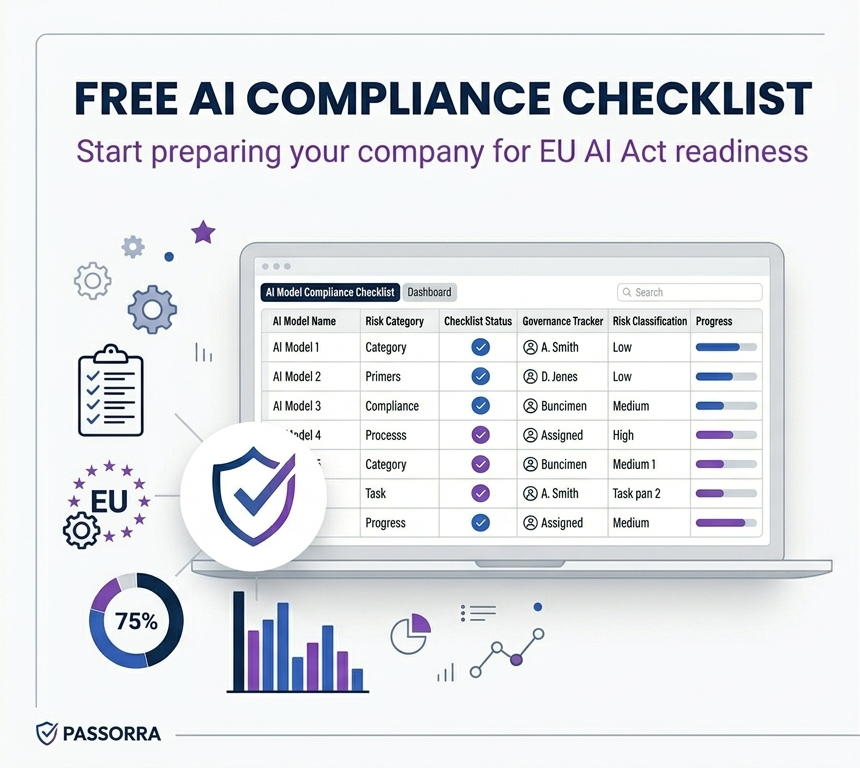
A practical template should include fields such as:
- AI system name
- business owner
- department
- vendor or internal build
- use case description
- deployment status
- risk review status
- documentation status
- last review date
The goal is not to create a perfect legal file on day one. The goal is to build a workable internal record.
How SMEs should use the template
Step 1: Identify all AI systems
Speak with product, engineering, operations, and leadership teams to identify where AI is actually being used.
Step 2: Record plain-language use cases
Document what each system does and why the business uses it. Keep descriptions simple and specific.
Step 3: Assign an owner
Every system should have someone responsible for its review and maintenance.
Step 4: Connect the inventory to documentation and governance
The inventory should not sit alone. It should connect to risk classification, governance tracking, and documentation review.
Need a practical AI compliance system?
The PASSORRA AI Compliance Toolkit helps startups and SMEs document AI systems, classify risks, and organize governance work in one place.
Common mistake: only tracking customer-facing AI
Many companies forget internal AI systems, third-party services, or AI features embedded in other tools. A good inventory should capture all meaningful AI usage across the organization, not just products sold to customers.
Why this matters for EU AI Act readiness
You cannot classify risk, assign responsibilities, or manage documentation unless you first know what AI systems exist. That is why a strong inventory template is often the foundation of practical compliance work.
Final thoughts
An AI system inventory template for SMEs is one of the highest-value tools in early compliance preparation. It gives the business operational clarity and makes later governance work far easier.
You can read AI Documentation Requirements Under the EU AI Act
You can also read Human Oversight Requirements for AI Systems
Disclaimer: This article is for informational purposes only and does not constitute legal advice.
Start Preparing for AI Act Compliance Today
Download the PASSORRA AI Compliance Toolkit and begin structuring your AI governance documentation today.
Get the Toolkit