AI Governance Policy Template for Startups
As companies adopt more AI tools and features, informal decision-making becomes risky. A simple AI governance policy helps startups define who is responsible for AI use, how systems are reviewed, and what standards the business expects internally.
This guide explains what an AI governance policy template should include and why even small teams benefit from having one.
What is an AI governance policy?
An AI governance policy is an internal document that defines how a company manages AI systems. It usually covers ownership, review processes, documentation expectations, oversight responsibilities, and escalation procedures.
It is not just for large enterprises. Startups also need clear rules, especially when multiple teams are using or deploying AI.
Why startups need an AI governance policy
Without a policy, AI decisions tend to become fragmented. Teams may adopt tools independently, documentation may be inconsistent, and leadership may not have a full view of risk exposure.
A basic governance policy creates structure around:
- who can approve new AI systems
- who owns existing systems
- how risk reviews are handled
- how documentation is maintained
- how incidents or concerns are escalated
What to include in an AI governance policy template
1. Policy purpose
State why the business has the policy and what it is intended to achieve.
2. Scope
Explain which AI systems, tools, teams, or workflows the policy covers.
3. Roles and responsibilities
Identify leadership, compliance, technical, and operational owners.
4. AI system review process
Document how new systems are approved or evaluated before use.
5. Documentation requirements
Set expectations for how AI systems should be recorded and maintained.
6. Risk review expectations
Define when systems require formal review or escalation.
7. Human oversight
Record when human intervention, supervision, or monitoring is expected.
8. Periodic review
The policy should not remain static. Set a review schedule.
Keep it practical, not overbuilt
Startups do not need a 40-page policy on day one. A short, practical governance policy is usually much more effective than a long document nobody reads or follows.
Need a practical AI compliance system?
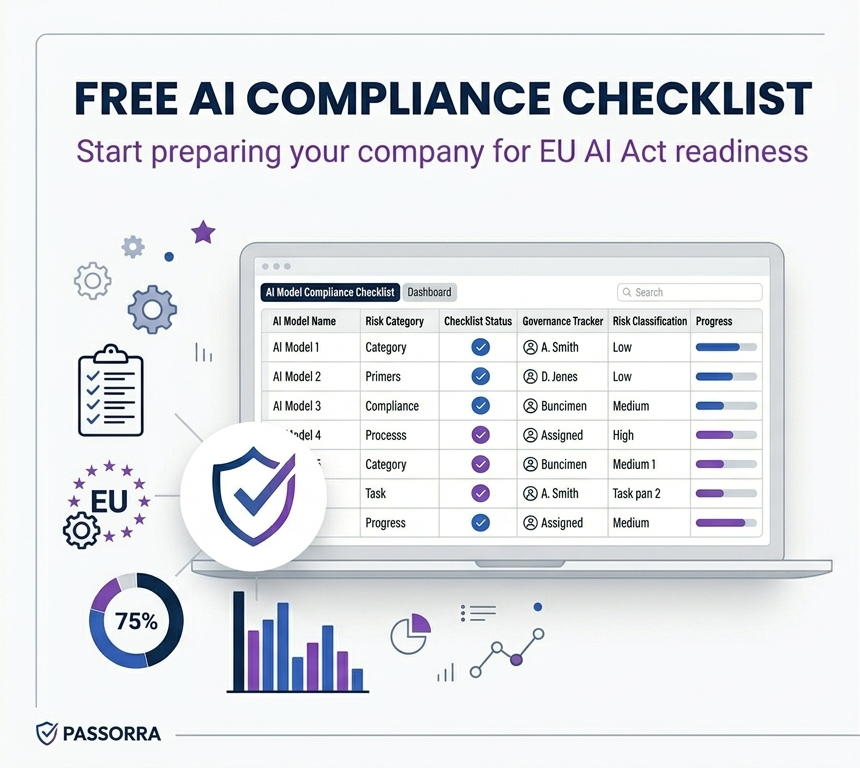
The PASSORRA AI Compliance Toolkit helps startups and SMEs document AI systems, classify risks, and organize governance work in one place.
Common mistake: confusing policy with legal perfection
The purpose of a governance policy is to create internal clarity and accountability. It does not need to sound like a law firm wrote it. It needs to work operationally inside your business.
Final thoughts
An AI governance policy template for startups helps smaller companies move from informal AI adoption to structured oversight. That shift becomes increasingly important as regulatory and customer expectations grow.
You can read EU AI Act risk classification explained
You can also read How to Create an AI System Register
Disclaimer: This article is for informational purposes only and does not constitute legal advice.
Start Preparing for AI Act Compliance Today
Download the PASSORRA AI Compliance Toolkit and begin structuring your AI governance documentation today.
Get the Toolkit