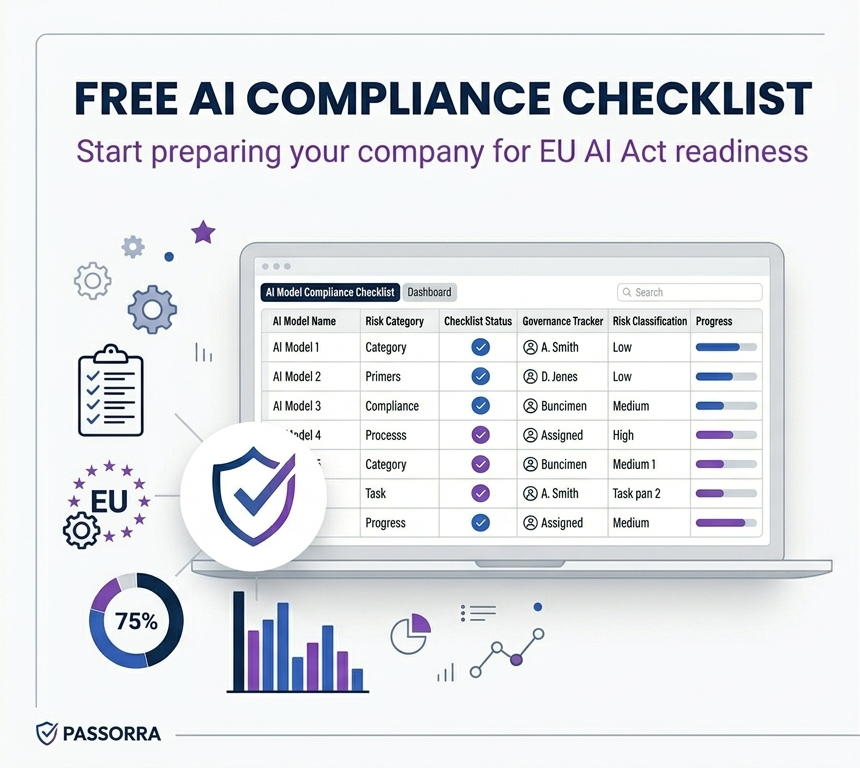
AI Risk Assessment Template for EU AI Act Readiness
Risk assessment is one of the most important parts of AI compliance preparation. If a company cannot explain what an AI system does, what risks it creates, and what controls are in place, it will struggle to build a credible governance process. That is why having an AI risk assessment template is so useful.
This guide explains what a practical risk assessment template should include for startups and SMEs preparing for EU AI Act readiness.
Why AI risk assessment matters
Not all AI systems create the same regulatory concerns. A system used for low-impact content assistance is not the same as a system influencing decisions that affect people, customers, or operations in a meaningful way.
A structured risk assessment helps companies review AI systems consistently instead of relying on assumptions.
What an AI risk assessment template should include
A practical template should include fields such as:
- AI system name
- system owner
- use case description
- affected users or stakeholders
- business impact
- potential risks identified
- existing controls or safeguards
- human oversight measures
- documentation status
- review date
This structure helps teams review systems more objectively.
How to use the template
1. Define the actual use case
Start with a plain-language explanation of what the system does. Avoid abstract descriptions.
2. Identify who is affected
Consider whether users, customers, employees, or other stakeholders could be affected by system outputs or decisions.
3. Record potential risks
Document what could go wrong operationally, ethically, or from a compliance perspective.
4. Record safeguards
List what controls already exist, including review processes, limitations, or human intervention points.
5. Link the assessment to documentation and governance
Risk assessment should not be isolated. It should connect to your system register, governance tracker, and documentation process.
Need a practical AI compliance system?
The PASSORRA AI Compliance Toolkit helps startups and SMEs document AI systems, classify risks, and organize governance work in one place.
Common mistake: turning risk assessment into guesswork
Without a template, different teams often assess the same system in inconsistent ways. A structured format creates repeatability and makes governance easier over time.
Why this supports EU AI Act readiness
The EU AI Act is built around a risk-based logic. Even before getting into legal detail, businesses should understand which systems deserve closer scrutiny and why. A strong risk assessment template helps create that internal discipline.
Final thoughts
An AI risk assessment template for EU AI Act readiness helps businesses move from vague concern to structured analysis. That is a major step toward better governance and better compliance preparation.
You can read EU AI Act risk classification explained
You can also read How to Create an AI System Register
Disclaimer: This article is for informational purposes only and does not constitute legal advice.
Start Preparing for AI Act Compliance Today
Download the PASSORRA AI Compliance Toolkit and begin structuring your AI governance documentation today.
Get the Toolkit