EU AI Act Explained in Simple Terms
The EU AI Act is a new European law designed to regulate how artificial intelligence systems are developed, sold, and used. For many startups and SMEs, the law sounds complicated, but the core idea is simple: the more risk an AI system creates, the more rules apply.
This guide explains the EU AI Act in plain language so smaller companies can understand what it means and why preparation matters.
What is the EU AI Act?
The EU AI Act is a legal framework created by the European Union to regulate AI systems based on risk. It is intended to improve safety, transparency, accountability, and trust in AI.
Instead of treating all AI systems the same, the law uses a risk-based approach. Some AI uses will face minimal obligations, while others will be heavily regulated.
Why does the EU AI Act matter?
It matters because companies building or using AI in the EU may need to prove that they understand their systems, document them properly, and apply appropriate controls. The law will affect software companies, startups, internal enterprise teams, and foreign companies selling into EU markets.
The basic idea: AI systems are grouped by risk
At a high level, the EU AI Act works like this:
- Unacceptable risk: some uses may be prohibited
- High risk: stricter obligations apply
- Limited risk: transparency obligations may apply
- Minimal risk: fewer or no heavy obligations
This is why risk classification is one of the most important first steps for any business using AI.
What will companies need to do?
For many businesses, preparation will involve practical internal work such as:
- creating an inventory of AI systems
- documenting intended uses
- classifying risk levels
- assigning internal owners
- tracking governance and review processes
- maintaining required documentation
Even smaller companies should not assume they are too early or too small to prepare.
Does this only apply to large enterprises?
No. Large enterprises may have bigger compliance teams, but smaller companies still need to understand where AI is being used, what risks exist, and what internal processes are in place. Startups and SMEs may not need huge legal departments, but they do need organized compliance preparation.
Simple example
Imagine a startup uses AI to help screen candidates, recommend insurance outcomes, or support decisions with serious effects on people. That type of use may attract stronger scrutiny than a simple content helper or internal productivity tool. The context matters.
Need a practical AI compliance system?
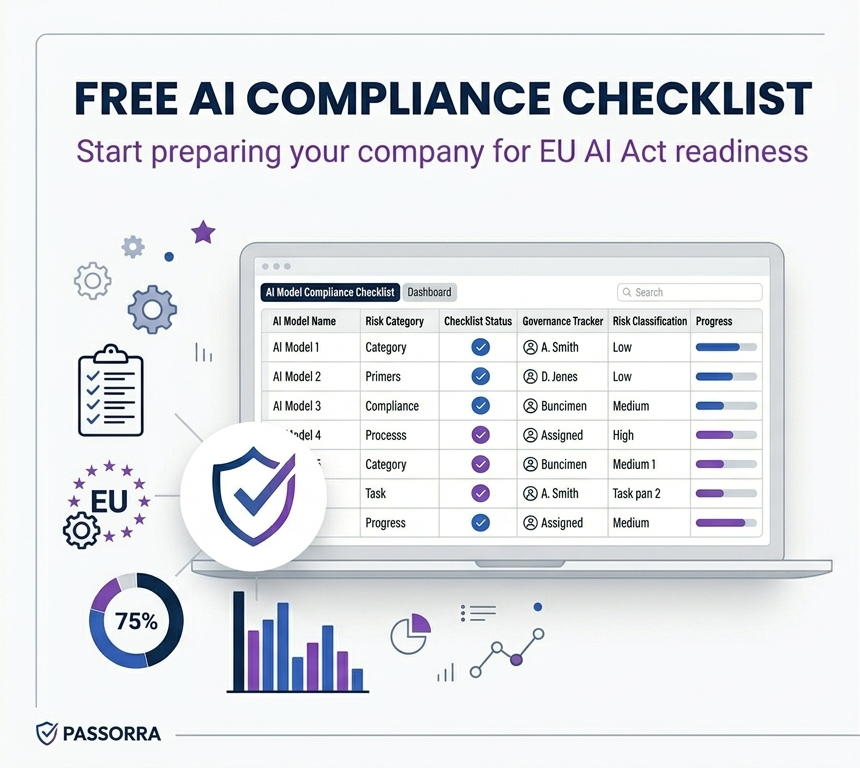
The PASSORRA AI Compliance Toolkit helps startups and SMEs document AI systems, classify risks, and organize governance work in one place.
What should SMEs do first?
If you are a startup or SME, do not begin with legal panic. Begin with operational clarity. Ask:
- What AI systems do we use?
- Who owns each one internally?
- What are they used for?
- Could any of them create higher regulatory risk?
- What documentation do we already have?
These questions will take you much further than abstract legal reading.
Final thoughts
The EU AI Act explained in simple terms is this: higher-risk AI needs stronger controls. Companies that start documenting systems and governance processes now will be in a much better position later.
You can read EU AI Act risk classification explained
You can also read AI Governance Framework for Startups and SMEs
Disclaimer: This article is for informational purposes only and does not constitute legal advice.
Start Preparing for AI Act Compliance Today
Download the PASSORRA AI Compliance Toolkit and begin structuring your AI governance documentation today.
Get the Toolkit