AI Literacy Requirements Under the EU AI Act
Published by Passorra
Although Switzerland is not part of the European Union, many Swiss companies will still be affected by the EU AI Act. Businesses that develop AI systems, sell AI-enabled products, or provide services to customers in the EU must understand how the regulation may apply to them.

For Swiss startups and SMEs, the challenge is not only understanding the regulation but also preparing internal processes that demonstrate responsible AI governance. Organizations that begin preparing early will find it much easier to adapt as regulatory expectations evolve.
This guide explains what Swiss SMEs should know about EU AI Act readiness and how companies operating across European markets can begin organizing their compliance work.
Why the EU AI Act Matters for Swiss Companies
The EU AI Act applies to organizations that develop, deploy, or distribute AI systems within the European market. This means that companies located outside the EU may still be subject to its rules if their products or services reach EU users.
For Swiss businesses, this often happens in several common scenarios:
- selling AI-enabled products to EU customers
- providing AI-powered digital services across EU markets
- integrating AI systems into platforms used by EU organizations
- working as technology vendors or suppliers to EU companies
Because Switzerland has strong economic ties with the EU, many Swiss companies already operate within this regulatory environment.
How the EU AI Act May Affect Swiss SMEs
The EU AI Act introduces obligations based on the level of risk associated with an AI system. Companies must assess whether their AI systems fall into prohibited, high-risk, limited-risk, or minimal-risk categories.
Depending on how a system is classified, organizations may need to prepare documentation, implement governance controls, and demonstrate responsible use of AI technologies.
For Swiss SMEs entering EU markets, understanding these expectations early can prevent disruption later when customers or partners begin requesting evidence of compliance readiness.
Common Situations Where Swiss Companies Are Impacted
Technology Startups
Swiss startups building AI-enabled products often sell software globally from the beginning. If the product is used within the EU, it may fall within the scope of EU AI Act obligations.
Software Vendors
Swiss software companies frequently provide analytics tools, automation platforms, and AI-enabled services to EU clients. In these cases, customers may expect vendors to demonstrate responsible AI governance.
Service Providers Using AI Tools
Consulting firms, marketing agencies, financial services providers, and HR platforms increasingly rely on AI systems internally. When services reach EU customers, those systems may still be subject to regulatory expectations.
Steps Swiss SMEs Can Take to Prepare
Swiss organizations do not need to wait for every regulatory detail to be finalized before beginning preparation. Several practical steps can be taken immediately.
Create an AI System Inventory
The first step is identifying all AI systems used or developed by the company. This includes internal tools, vendor platforms, and AI features embedded in products.
If you have not yet built this inventory, start with our guide on how to create an AI system register.
Review Risk Classification
Once systems are documented, organizations should evaluate how each system might be categorized within the EU AI Act risk framework.
Learn more in our article: EU AI Act Risk Classification Explained for SMEs.
Organize Documentation
Companies should begin maintaining structured documentation that records system purpose, ownership, oversight processes, and governance decisions.
Establish Basic AI Governance
Even a small governance structure can help organizations manage AI responsibly. This may include assigning internal owners for AI systems, documenting review processes, and defining oversight responsibilities.
Why Early Preparation Matters
Swiss companies that prepare early for EU AI governance expectations will find it easier to expand into European markets. Many EU customers are already beginning to ask vendors about AI governance practices and documentation readiness.
Organizations that cannot answer these questions may face delays in procurement processes, partnership negotiations, or regulatory reviews.
Early preparation helps businesses demonstrate credibility and operational maturity.
How Passorra Helps
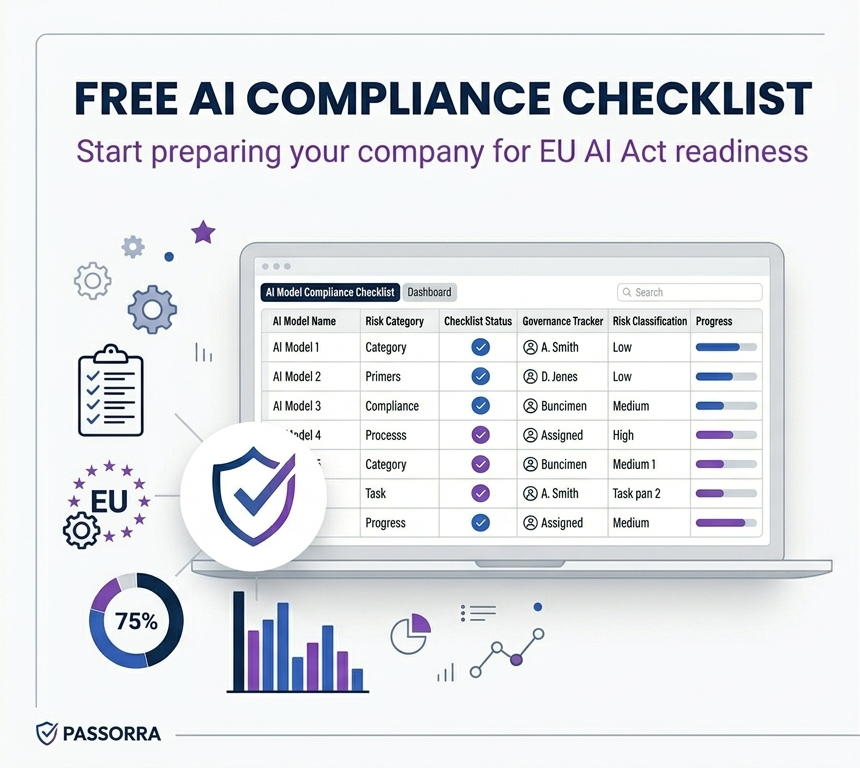
The Passorra AI Compliance Toolkit provides a structured framework designed to help startups and SMEs organize AI governance work.
The toolkit includes structured registers, documentation trackers, and compliance dashboards that make it easier to track AI systems, assess risk levels, and monitor readiness across teams.
Instead of starting with a blank spreadsheet, organizations can begin with a structured framework designed for practical compliance preparation.
Final Thoughts
Swiss SMEs operating in European markets should pay close attention to the EU AI Act even if their headquarters are outside the EU.
Understanding where AI systems are used, how they are classified, and how governance processes are documented will become increasingly important for companies selling products or services across Europe.
Organizations that build these processes early will be better positioned to operate confidently in the evolving AI regulatory landscape.